





Water Pumps: Types and How to Choose the Right One
Water pumps are essential tools for both residential and commercial locations, as they are directly related to a basic necessity of water. This article explains the differences between the various types of water pumps and provides a simple and straightforward guide to selecting the right pump.
What is a Water Pump?
A water pump is an electromechanical device used to increase water pressure in order to transfer water from one place to another in the shortest possible time. Modern water pumps are used worldwide to meet domestic, industrial, and agricultural water needs.
Water pumps are also used in wastewater treatment and sewage disposal facilities.
Most water pumps operate on electricity; however, other types powered by diesel or gasoline are used in certain agricultural sites or desert areas.
When it comes to water pumps, there are several different types designed for specific purposes and applications. Below is an overview highlighting the main differences between the most commonly used types of water pumps.
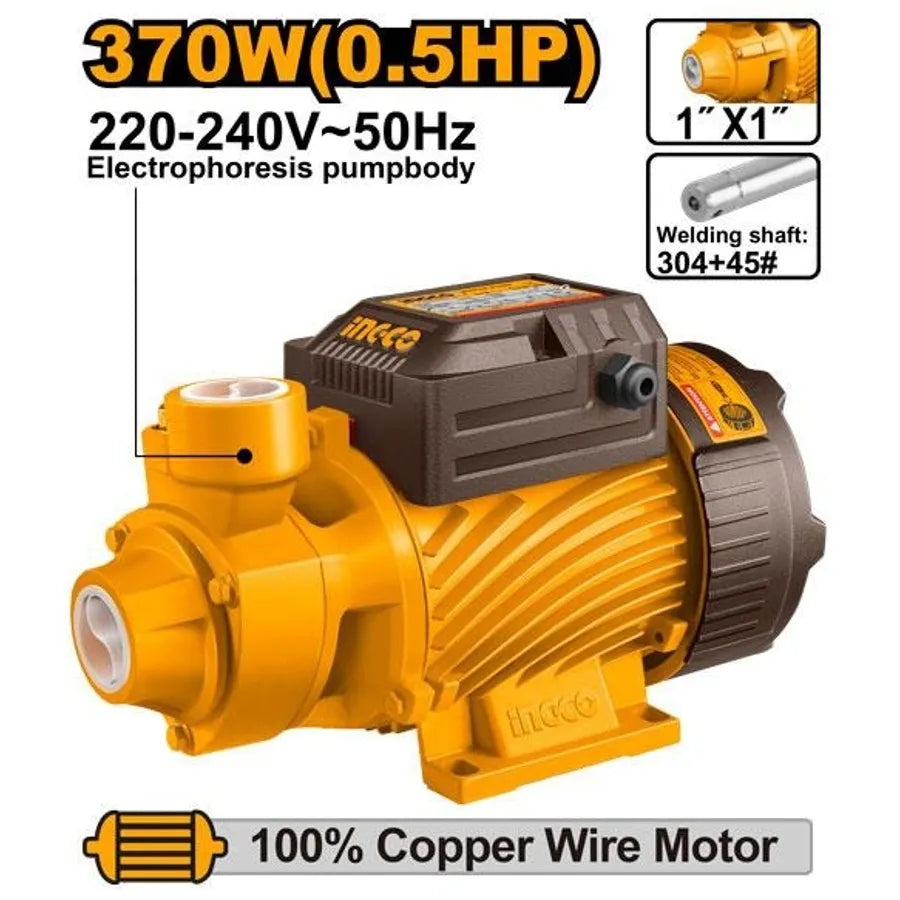
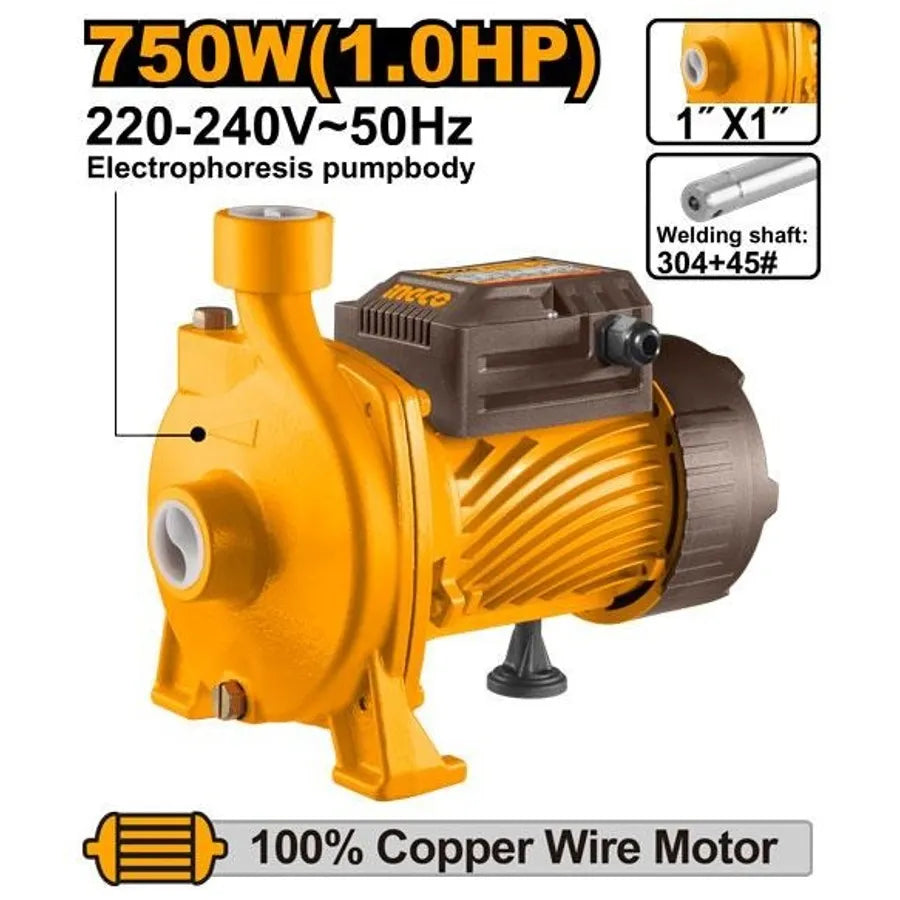
Centrifugal Pumps
Centrifugal pumps are the most commonly used in residential and industrial applications due to their simplicity and versatility. They work by converting rotational kinetic energy into hydrodynamic energy, pushing water from the center of rotation outward.
Centrifugal pumps are divided into two main types:
-
Narrow Impeller Pumps: Used when lifting water from a lower point to a higher point
(bottom to top), such as filling a water tank.
-
Wide Impeller Pumps: Used when increasing water flow from a higher point to a lower point
(top to bottom), such as boosting water network flow and obtaining strong water pressure at home taps or water heaters.
Applications: Suitable for pumping water from tanks either to a higher point (narrow impeller) or to a lower point (wide impeller).
Advantages: Simple design, easy maintenance, suitable for moderate flow rates.
Limitations: Not suitable for high-pressure applications without additional stages.
Example Products:
- ½ HP Narrow Impeller Stainless Steel Pump
- 0.5 HP Wide Impeller Pump
Submersible Pumps
Submersible pumps are designed to be fully immersed in water and are commonly used for deep well applications. They operate by pushing water toward the surface rather than pulling it from ground level.
Applications: Deep wells and underground tanks.
Advantages: High efficiency in pumping water from great depths, quiet operation.
Limitations: Installation and maintenance are more complex due to full submersion in water.
Example Product:
- 1 HP Stainless Steel Submersible Pump
Jet Pumps
Jet pumps use an ejector and diffuser system to create strong suction, allowing water to be lifted from wells or underground sources. They can be used for surface or deep well applications.
Applications: Shallow wells and areas with fluctuating water levels.
Advantages: Suitable for varying well depths, cost-effective for shallow wells.
Limitations: Less efficient than submersible pumps for deep wells and generally noisier.
Example Product:
- 1 HP Jet Pump
Choosing the Right Pump
When selecting the right pump for your needs, consider the following factors:
- Flow rate (liters per minute)
- Pump power (½ HP, 1 HP, 2 HP)
- Internal household water network pressure
- Type of liquid (clean water, wastewater, chemicals, solid materials)
Installation: Installation requirements vary depending on the pump type. Some pumps can be installed easily by the user, while others require a specialist.
Maintenance: Regular maintenance such as cleaning the pump and checking pipes and openings ensures long service life and optimal pump performance.